The implementation of Odoo ERP has become one of the strategic steps frequently chosen by companies in Indonesia to improve operational efficiency and accelerate digital transformation. With an integrated system, companies can manage various business processes—such as finance, sales, inventory, purchasing, production, and human resources—all on a single platform.
However, the success of an Odoo ERP implementation does not depend solely on the software used. Companies also need to understand the implementation phases, prepare an internal team, and collaborate with an experienced implementation partner.
This article provides a comprehensive overview of the Odoo ERP implementation process, the benefits companies gain, and the factors that determine the success of an ERP project.
What Is Odoo ERP Implementation?
Odoo ERP implementation is the process of integrating the Odoo system into a company’s operations so that all business processes can run in an integrated manner.
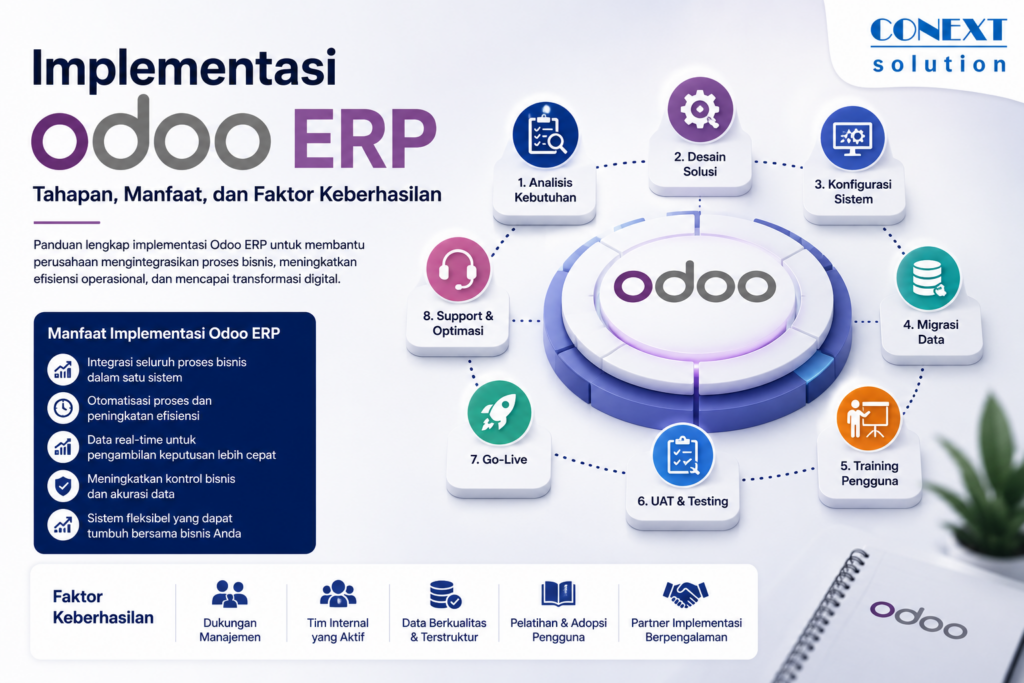
This implementation includes:
- Business needs analysis
- System configuration
- Data migration
- User training
- System testing
- Go-Live
- Post-Implementation Support
The primary goal of implementing Odoo ERP is to improve efficiency, data accuracy, and overall business visibility.
Why Do Companies Need to Implement Odoo ERP?
Many companies still use various standalone applications.
For example:
- Accounting uses Software A
- Inventory uses Software B
- Sales uses a spreadsheet
- Purchasing uses yet another application
This situation often leads to:
- Data not synchronized
- Duplication of work
- Input errors
- Delayed reports
Through the implementation of Odoo ERP, all data is centralized in a single system, making business processes more effective.
Benefits of Implementing Odoo ERP
1. Integration of All Departments
Odoo connects various business functions within a single database.
The finance, warehouse, purchasing, sales, and production departments can all work using the same data.
SEE ALSO: SAP Business One Implementation: Phases, Benefits, and Success Factors
2. Business Process Automation
Many manual tasks can be automated, such as:
- Purchasing approvals
- Invoice generation
- Inventory management
- Financial reporting
3. Real-Time Data
Management can view the state of the business at any time through a constantly updated dashboard.
4. Increased Productivity
Employees can focus on value-added activities because administrative work is reduced.
5. Supporting Company Growth
Odoo is modular, allowing companies to add features as their business needs evolve.
Stages of Odoo ERP Implementation
Business Needs Analysis
The first step is to understand the company’s business processes.
Activities include:
- Business needs workshop
- Business process mapping
- Identification of operational issues
- Determining implementation targets
This phase is critical as it forms the basis for system configuration.
Solution Design
Once the requirements are understood, the implementation team designs an appropriate solution.
Some aspects that are designed:
- Workflow
- Organizational structure
- User access rights
- Dashboard
- Reports
System Configuration
Odoo is configured based on the company’s needs.
For example:
- Set up accounting
- Inventory setup
- Purchasing Setup
- Manufacturing setup
- Sales setup
Data Migration
Old data is transferred to the new system.
Typically includes:
- Customer data
- Vendor data
- Product data
- Opening balances
- Transaction data
Data migration must be performed carefully to ensure data quality is maintained.
User Acceptance Test (UAT)
Before the system is officially put into use, users conduct testing.
The goal is to ensure that all processes run according to business needs.
User Training
Training is a critical factor in the success of the Odoo ERP implementation.
Users must understand:
- How to use the system
- New workflows
- Report generation
- Operational procedures
Go-Live
Once all stages are complete, the system is rolled out to all users.
The initial go-live period typically requires intensive support from the implementation team.
Support and Optimization
After implementation is complete, the company will still require support for:
- System Improvements
- New feature development
- Ongoing training
- Business process optimization
How Long Does Odoo ERP Implementation Take?
The duration of implementation depends on the complexity of the business.
| Company Size | Estimated Duration |
|---|---|
| Small | 1–2 months |
| Medium | 2–4 months |
| Large | 4–8 months |
SEE ALSO: SAP Business One vs. Odoo: Which ERP Is Better Suited for Your Business?
The more modules used, the longer the implementation time.
Factors for Successful Odoo ERP Implementation
Management Support
Management must fully support the implementation project.
Active Internal Team
The company needs to appoint key users from each department.
High-Quality Data
Clean data will speed up implementation.
Adequate Training
Users who understand the system will adapt more quickly.
Experienced Implementation Partner
Implementation partners play a crucial role in ensuring the project stays on track.
Challenges in Implementing Odoo ERP
Some common challenges include:
- Resistance to change
- Poor data quality
- Changing business needs
- Lack of user training
- Unrealistic timelines
With careful planning, these challenges can be minimized.
Conclusion
Implementing Odoo ERP is a strategic investment that can help companies improve operational efficiency, integrate all business processes, and accelerate digital transformation.
By understanding the implementation phases, assembling the right team, and collaborating with an experienced implementation partner, companies can maximize the benefits of the Odoo ERP system.
FAQ
What is Odoo ERP implementation?
Odoo ERP implementation is the process of deploying the Odoo system to integrate all of a company’s business processes into a single platform.
Is Odoo suitable for small businesses?
Yes. Odoo is highly flexible and can be used by companies ranging from small to large.
How long does an Odoo ERP implementation take?
The implementation typically takes between 1 and 8 months, depending on the complexity of the business.
What are the benefits of implementing Odoo ERP?
The benefits include data integration, process automation, real-time reporting, and improved operational efficiency.
Why is it necessary to use an Odoo consultant?
Consultants help ensure the implementation aligns with business needs and minimizes the risk of project failure.